Tax Implications of Hiring Contractors vs. Employees
Employers must understand the tax implications of employee vs. independent contractor classification. If a business misclassifies a worker, it may have to pay back taxes and other penalties. Awareness of tax implications can help prevent such errors.
What You Need to Know
Any debate on employee vs. independent contractor cannot happen without discussing tax implications.
This is because tax is a big part of a business’s financial and compliance responsibilities.
So, let’s discuss an employer’s tax responsibilities for its employees and contractors.
Employee vs. Independent Contractor: What are the Tax Responsibilities of Employers?
A business’s tax responsibilities are different for employees than for contractors. Hence, it’s important to understand tax implications. The idea is to get a grip on the employee vs. independent contractor topic.
What are the Tax Responsibilities of Employers for Their Employees?
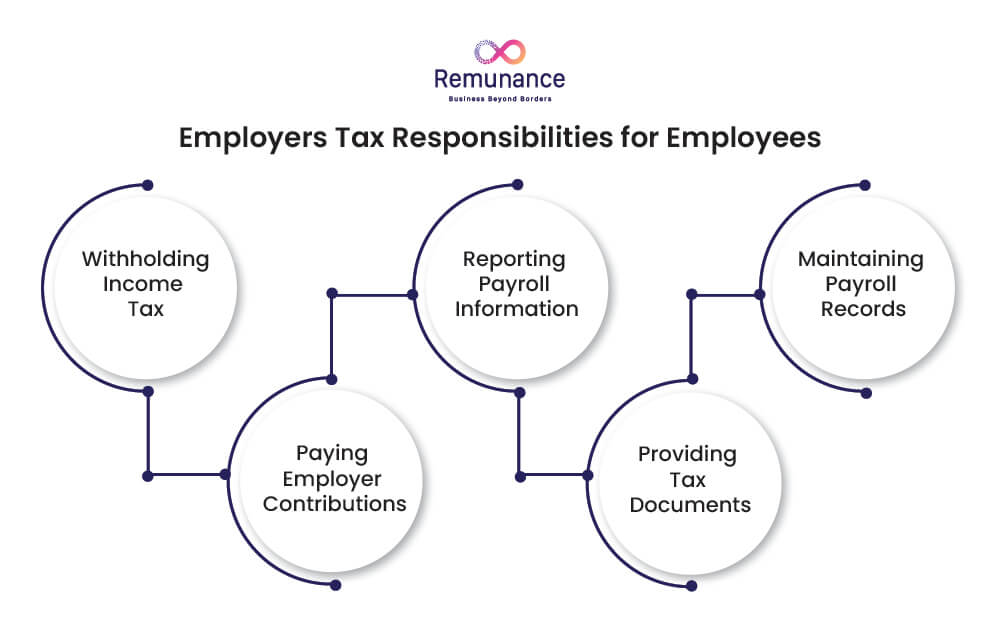
Employers have many tax responsibilities for their employees. Typically, employers act as an intermediary between tax authorities and their employees.
In this context, employers’ responsibilities include the following:
-
- Withholding income tax: Employers have to deduct income tax from their employees’ salaries. They must remit the amount to the tax authority in their country.
- Paying employer contributions: Employers must contribute to government programs in many countries. These programs focus on social security, healthcare, and workers’ welfare.
- Reporting payroll information: Employers often have to report payroll information to government authorities. This information includes wages, taxes withheld, and employment-related contributions.
- Providing tax documents: Employers must also provide tax documents to their employees. These documents show employees’ salary, withheld taxes, etc.
- Maintaining payroll records: Employers must maintain accurate records of salaries, taxes, & deductions. These records are useful during audits or other inspections.
In India, employers must deduct tax at source (TDS) from their employees’ salaries. They must also deposit the TDS with the government.
Employers must provide Form 16 to employees. This form has information about their salary and TDS for the financial year.
In India, employers may have to make contributions if they meet certain requirements. They must contribute to EPF and ESI. EPF stands for Employees’ Provident Fund. ESI refers to Employees’ State Insurance.
Do Employers Have Tax Responsibilities When They Hire Independent Contractors?
Independent contractors generally have to pay their own income tax. Even then, firms that hire them may have certain tax-related responsibilities such as:
-
- Tax withholding: Companies have to withhold tax from contractors’ payments in some countries. Further, these firms must remit the tax to the relevant authority.
- Indirect taxes: Contractors, at times, charge value added tax (VAT) or goods and services (GST) on their services. Their hiring company may have to pay, collect, or report such taxes.
- Reporting: Businesses may have to report their contractor payments to government authorities. They may also be required to provide tax certificates to contractors.
India has certain tax provisions for payments made to contractors. These provisions may require companies to deduct TDS from such payments. These TDS rules depend on many factors. These include a contractor’s status and the nature of his services.
Firms may have certain GST obligations for engaging contractors for services in India.
When a firm hires a contractor in India, it’s not normally responsible for his personal income tax. Usually, a contractor has to pay his income tax on his own.
We’ve discussed employers’ tax responsibilities. Now, let’s dig deeper into the topic of employee vs. independent contractor.
What Happens When a Business Misclassifies an Employee from a Tax Perspective?
Employee misclassification can have serious tax consequences for a business.
Besides, it can negatively affect a company’s reputation. So, you should know how to correctly classify a worker.
You must also know about tax penalties for worker misclassification.
Which Penalties May a Business Have to Pay for Worker Misclassification?
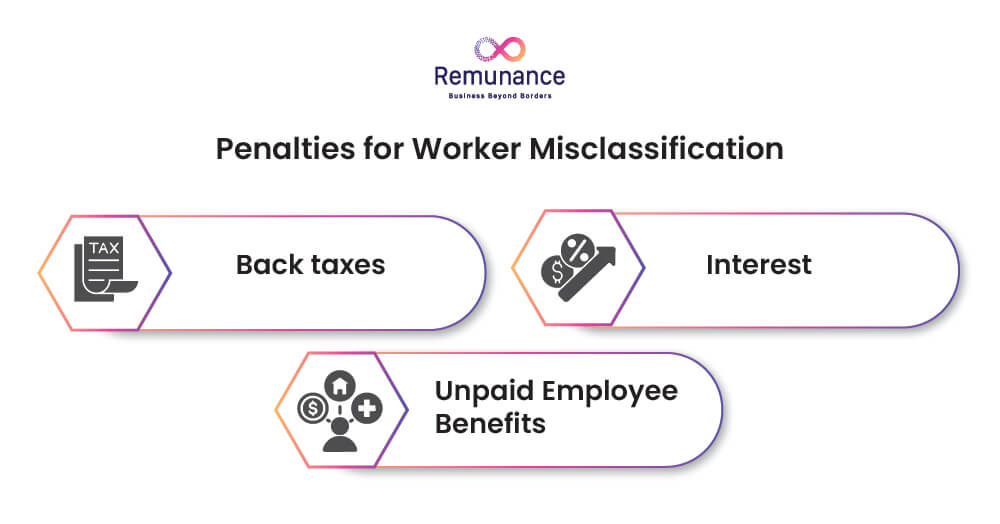
Let’s say a business misclassifies a worker as an independent contractor. But that worker should have been classified as an employee. In this case, it may have to pay significant penalties and back taxes.
The exact penalty may vary by country. So, let’s look at common consequences for this offense:
-
- Back taxes: Let’s say a company treated a worker as a contractor when he should have been treated as an employee. As a result, it did not make employee-related tax payments. Suppose authorities decide that the worker was an employee. They may tell the company to pay employment-related taxes from an earlier date.
-
- Interest: Authorities may make the business pay interest on money that it should have paid earlier if it had correctly classified the worker.
-
- Unpaid employee benefits: Authorities may instruct the business to pay unpaid pension, healthcare, and other contributions.
So, it’s important to examine worker classification before hiring. It’s equally important to review classification when the working relationship changes.
How to Determine the Correct Worker Classification?
The rules that govern worker classification differ from country to country. But this classification depends most on the actual working relationship.
So, let’s discuss the factors that help us decide the real working relationship.
-
- Extent of control: If a business greatly controls how a worker performs a task, it may show an employee relationship. But if a business allows a worker to decide how and when to perform his task, it could be a contractor relationship.
-
- Benefits: Employers have to pay benefits to their employees. These benefits include paid leave, retirement benefits, etc. But contractors generally don’t receive such benefits.
-
- Tools for work: Employees usually get tools, like a computer, from their employers to perform work. But contractors have to rely on their own resources to do their job.
-
- Regular payments: Employees usually receive regular salaries (once a month or a week). Contractors, however, receive payments once they submit their invoices after finishing their job.
-
- Duration of working relationship: An ongoing working relationship without an end date is more like employment. Meanwhile, companies hire contractors for a specific project or for a certain period.
Not Sure If It's Employee or Contractor?
Classification rules shift by country. Let Remunance assess your workforce and confirm the right status for every hire.
Can Remunance Help You to Correctly Classify Your Workers?
Suppose employee vs. independent contractor classification is worrying you. In that case, you should get in touch with Remunance.
Remunance has deep knowledge of Indian laws and regulations. It helps many businesses find out the correct classification of workers in India.
Often, Indian laws and regulations change. Remunance ensures that its clients stay updated with such changes. This reduces their compliance risk.
Remunance Employer of Record
Hire Compliantly in India, Every Time
Remunance handles classification, payroll tax, and statutory compliance so you can hire without the risk.
Talk to Our Experts
Frequently Asked Questions (FAQs)
How does employee vs. independent contractor classification affect employer tax responsibilities?
Employee vs. independent contractor classification helps to determine a business’s tax responsibilities. A business generally has to withhold and pay certain payroll taxes for its employees.
But businesses don’t typically have to withhold these taxes for independent contractors. This is because independent contractors handle their own tax obligations.
Why is employee vs. independent contractor classification important for businesses?
Employee vs. independent contractor classification is important for businesses. It helps employers understand their tax and other obligations towards their workers. Moreover, misclassifying workers may result in huge penalties and compliance issues.
Is employee vs. independent contractor classification important globally?
Employee vs. independent contractor classification is important worldwide. Besides, rules governing such classification may differ across countries. Hence, correctly classifying workers is important for companies operating in many countries.
Should tax implications play a role in deciding whether to hire an employee or a contractor?
Businesses must consider tax implications to make this decision. But they shouldn’t be the only factor. Apart from that, firms must consider other factors. These factors are control, employee benefits, etc.

Related Posts

What is a Contractor of Record? Complete Guide

How Does Remunance Manage Independent Contractors in India Better?