
Summary
An Employer of Record for independent contractors helps handle contracts, compliance, taxes, and cross-border payments. Plus, it doesn’t need a local entity. It cuts misclassification risks. It also provides legal protection. Plus, it simplifies onboarding. This helps with global hiring, saving both time and money.
An Employer of Record is a service that helps your organization hire and recruit resources from around the globe without the need for a subsidiary and without the worry of any legal compliance.
While there is a common misconception that employer of record services are only suited for full-time employees, Employer of Record for independent contractors is a concept that has gained tremendous popularity. An Employer of Record in this situation helps with documentation, timely payment, and legal protection.
Understanding the Employer of Record Model
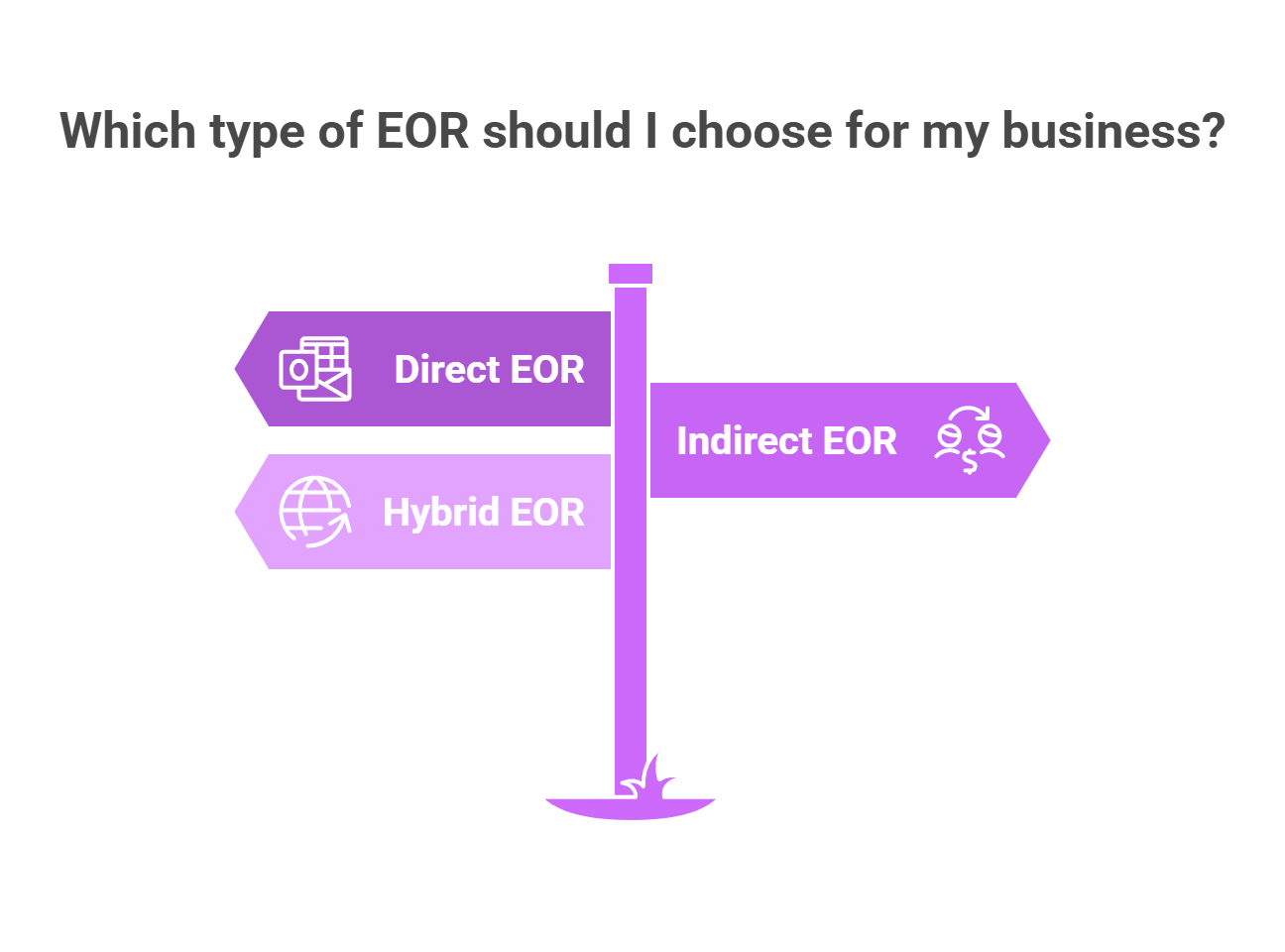
An EOR, or Employer of Record, is an extremely comprehensive solution, so when it comes down to choosing the right EOR, you have the power and liberty to choose from the multiple model that suits you the best.
-
- Direct EOR: Direct EORs are also well known as local EORs; they are the ones with a well-established legal entity in the target country where the parent company desires to operate. Because of their local presence, they bring in the authority
- Indirect EOR: Indirect EORs rely heavily on their partners; these EORs are best suited for businesses looking to do light work across multiple locations, with indirect EORs the only drawback being that your POC might not have the ultimate authority on the outcome.
- Hybrid EOR: Hybrid EORs are the ones that operate in key geographies around the globe and partner with local EORs to supplement in the developing geographies. Hybrid EORs are best suited for businesses that wish to utilize EOR services to process employees across geographies.
You can get a detailed account of Employer of Record models through our dedicated blog about the same.
What an EOR Does and Doesn’t Do
An EOR helps cover the length and breadth of employment internationally. It takes care of all the compliance-related worries and works meticulously to ensure you are not caught in the crossfire if anything goes haywire.
EOR also helps with employee lifecycle management, payroll, and employee benefits monitoring.
Employer of Record for Independent contractors, however, goes a step further by helping with local compliance through mandated TDS, a local contract to skip the risk associated with the Permanent Establishment Law.
Manage Independent Contractors the Smart Way
Ensure compliance, avoid risks, and streamline payments with a trusted EOR partner.
Role of EOR in Contractor Management vs. Employee Management
An Employer of Record (EOR) plays a different role when managing independent contractors compared to full-time employees, even though the goal in both cases is to ensure legal compliance and smooth operations.

EOR in Contractor Management
While operating as an Employer of Record for independent contractors, the EOR acts as a compliance and payment facilitator rather than a traditional employer. The focus is on:
-
- Writing contracts that are legal in the area and clearly spell out the project’s scope and payment terms.
- Making sure that contractor categorization follows local rules so that workers are not misclassified and do not have to pay fines.
- Handling payments across borders in different currencies while also meeting tax reporting requirements.
- Giving people a legal framework that keeps their intellectual property (IP) safe and private.
The EOR does not control the contractor’s work schedule or dictate how tasks are completed, which helps maintain the contractor’s independent status.
EOR in Employee Management
For employees, the EOR becomes the legal employer of record in the nation where the worker lives. This means:
-
- Taking care of payroll, taxes, and required benefits like health insurance and retirement contributions.
- Taking care of onboarding, HR rules, managing time off, and following local labor laws.
- Taking complete responsibility for classifying employees, firing them, and settling labor law problems.
Employees under an EOR have set timetables, reporting systems, and business policies that they must follow, unlike contractors.
Key Difference
The main difference lies in legal responsibility and control:
-
- Contractors: The EOR makes sure that payments, contracts, and rules are followed while yet allowing for a flexible and autonomous working relationship.
- Employees: The EOR is the only legal employer and is responsible for all HR, payroll, and compliance tasks.

An EOR lets firms hire people from all over the world, whether they are contractors or employees, without having to set up a local corporation.
Simplify Workforce Management with EOR
From contractor agreements to full employee compliance, get tailored solutions for your business needs.
Explore EOR SolutionsWhy Independent Contractors Need EOR Support
Hiring independent contractors from other countries gives you more freedom, but it also makes it harder to follow the rules and run your business.
Businesses that hire independent contractors without an Employer of Record (EOR) risk legal problems, late payments, and harm to professional relationships. This is why EOR support is so important.
1. Misclassification Risks and Potential Penalties
Misclassifying workers is one of the main risks of hiring foreign contractors. Authorities in several countries may reclassify contractors as employees if they operate under the same conditions as employees, such as having set hours, controlled workflows, and exclusive relationships. This can result in:
-
- Retroactive payment of employee benefits and entitlements
- Large fines and tax penalties
- Potential legal disputes with the contractor
An EOR makes sure that contractors are properly classified and that their contracts follow the rules for their jurisdiction, thereby reducing the risk of penalties.
2. Legal Requirements in Different Countries
Each nation possesses distinct labor regulations, contractual stipulations, and mechanisms for resolving disputes. For instance:
-
- Some places require contracts to be drafted in the native language.
- Some countries require contractors to have insurance or follow safety rules.
- Unless otherwise stated, intellectual property rights belong to the contractor.
An EOR knows the laws in the area and can write agreements that follow them and take care of any country-specific duties, making sure that engagements are legally sound.
3. Tax Withholding and Social Security Obligations
In many nations, companies that hire contractors may have to withhold income taxes or pay into social security for them. Not following the rules can mean paying back money and interest.
An EOR is in charge of:
-
- Withholding the right amount of taxes (if necessary)
- Paying and filing taxes with municipal governments
- Making sure that payments to essential social funds are made when needed
This takes the administrative burden off of businesses while yet making sure they follow the rules.
4. Contract Enforcement and Payment Reliability
Banking rules, currency problems, or compliance checks can all cause cross-border transfers to be delayed or stopped. Contractors may also have trouble enforcing contracts in other countries.
EORs give:
-
- Payments in local currency that are always on time
- Contracts that are enforceable and hold up in local courts
- Payment mechanisms that are safe and can be tracked to develop trust with freelancers
An EOR lets firms manage independent contractors around the world with confidence by centralizing compliance, payments, and legal protections. This makes sure that contractors are paid on time and are safe.
How EOR Services Work for Independent Contractors
The Employer of Record (EOR) approach for contractors makes it easier to work with people from other countries while still following all the rules.
The EOR is the link between corporations and independent contractors, from hiring to paying them.
1. Step-by-Step Process from Onboarding to Payment
The EOR workflow usually goes in a set order:
-
- Contractor Onboarding: Getting personal, tax, and banking information.
- Writing contracts: making sure that agreements are valid in the jurisdiction.
- Compliance Checks: Checking that the categorization and local laws are being followed.
- Setting up payments: Setting up safe payment channels that work with more than one currency.
- Ongoing Management: Handling payroll, taxes, and reports on compliance.
This way, contractors can get to work right away without corporations needing to set up a local business.
2. Key Documents: Contracts, NDAs, and Compliance Paperwork
An EOR makes and keeps track of all the paperwork that is legally required, such as:
-
- Service Agreements: Clearly laying out the project’s deliverables, deadlines, and payment terms.
- Non-Disclosure Agreements (NDAs): Keeping private firm information safe.
- Compliance Documentation: This includes tax registrations, statutory declarations, and terms regarding intellectual property ownership.
Having these papers in line with local legislation reduces the likelihood of disagreements and makes it easier to enforce.
3. Payment Schedules, Currency Conversion, and Local Taxation
One of the best contractor compliance services that an EOR can provide is ensuring timely and full payments.
-
- Payment schedules might be fixed monthly, based on milestones, or when the project is done.
- Currency Conversion: The contractor’s native currency is automatically and clearly exchanged.
- Local Tax Compliance: Using the right withholding rates and sending them to the right local authorities when they are needed.
This makes it easier to deal with cross-border banking, changing exchange rates, and filing taxes.
4. Dispute Resolution Mechanisms
If there are conflicts about payment delays, contract terms, or deliverables, the EOR functions as a neutral middleman.
-
- Helps people settle their differences in a way that is fair and follows local regulations.
- Protects the client’s interests while giving the contractor a way to get help.
- Keeps records that help both sides in case the situation goes to court.
An EOR takes care of all of these stages from start to finish, which makes it easier for enterprises and independent contractors to operate together and lowers the chance of compliance issues.
See How EOR Works for Independent Contractors
From onboarding to payments, Remunance manages every step so you can hire globally without risks.
Discover How It WorksBenefits of Using an EOR for Independent Contractors
Businesses and freelancers can work together across borders in a structured, compliant, and effective way by hiring an Employer of Record (EOR).
This is how EOR services help both sides.
1. Compliance with Local Labor Laws
Every country has its own rules for how independent contractors can work together, from how to classify them to how much they have to pay in taxes.
An EOR ensures that:
-
- Contracts meet the standards of the jurisdiction in question.
- To avoid penalties for misclassifying workers, it is important to do it correctly.
- All legal requirements, including paying taxes or getting insurance, are met.
This legal compliance keeps both the firm and the contractor safe from surprise legal problems.
2. Hassle-Free Cross-Border Payments
Payments across countries might take a long time, cost a lot, and be delayed by banks. EORs make this process easier by:
-
- Making sure that payments are safe and made on schedule in the contractor’s native currency.
- Managing currency conversion in a clear way.
- Figuring out how to get around banking rules in each country to avoid delays.
This stability helps keep good relationships with contractors and makes it easier to estimate cash flow.
3. Reduced Administrative Burden
Companies have to handle contracts, tax filings, and payments on their own if they don’t have an EOR. This typically means they need to know a lot about different nations.
An EOR takes care of this work by being the only person to talk to about:
-
- Checks for onboarding and compliance
- Processing payments and sending in taxes
- Updating paperwork and renewing contracts
This lets internal resources focus on delivering projects instead than doing back-office work.
4. Access to Local Expertise and Legal Support
EOR suppliers have experts in the country who know:
-
- Conditions in the local job market
- Laws about taxes and jobs
- Requirements for compliance that are specific to an industry
This knowledge lowers the chance of making expensive mistakes and makes sure that things run well, especially in complicated legal settings.
5. Faster Onboarding and Project Start Times
It can take months to set up a legal corporation or make sure that all the rules are followed while doing business across borders. EORs can bring on contractors in just a few days by:
-
- Using legal structures that are already in place in the area
- Quickly making contracts that follow the rules
- Setting up payment and compliance mechanisms right away
This speed helps businesses meet market needs more quickly and gives contractors clear information about terms and deadlines right away.
An EOR sets up a system that lets businesses and independent contractors operate together across borders with confidence and productivity. It does this by making sure that everyone follows the law, that payments are made quickly, and that operations run smoothly.
Employer of Record vs. Direct Hiring for Contractors
Companies often weigh the pros and cons of utilizing an Employer of Record (EOR) vs managing the hiring process themselves when hiring independent contractors.
Each method has varied effects on cost, speed, risk, and growth opportunities.
1. Cost Comparison (EOR Fees vs. In-House Legal/Accounting Costs)
-
- EOR Model: You can charge a flat fee for each contractor or a percentage of their compensation, which is usually between 5% and 15%. This includes following the rules, paying employees, handling contracts, and paying taxes.
- Direct Hire Model: Businesses have to pay for legal, HR, and accounting charges in the country where each contractor works. Costs include setting up the business, registering for taxes, managing payroll on an ongoing basis, and getting legal advice.
- EOR Model: You can charge a flat fee for each contractor or a percentage of their compensation, which is usually between 5% and 15%. This includes following the rules, paying employees, handling contracts, and paying taxes.
When organizations hire people in more than one country, EOR fees are generally lower and easier to estimate than keeping legal and accounting teams in-house or outsourcing them.
2. Time to Onboard
-
- EOR: You can hire contractors in just a few days utilizing existing local frameworks, pre-vetted contracts, and payroll systems that are ready to use.
- Direct Hiring: Setting up a legal business, checking for compliance, and setting up banking and payment systems can take weeks or even months.
- EOR: You can hire contractors in just a few days utilizing existing local frameworks, pre-vetted contracts, and payroll systems that are ready to use.
EORs cut down on the time it takes for new employees to become productive, which makes them great for projects that need to be done quickly or for expanding into new markets.
3. Risk Exposure in Each Model
-
- EOR: Takes on the legal duty for following the law, classifying employees, and paying taxes, which lowers the risk of fines for the client company.
- Direct Hire: The business is directly responsible for misclassifying workers, not paying taxes, and breaking labor laws. The contractor’s jurisdiction must manage legal issues, which can be quite expensive.
The EOR model lowers the chance of not following the law, especially in places where contractor laws are very tight.
4. Flexibility in Scaling Teams Up or Down
-
- EOR: Lets companies swiftly add or remove contractors without having to make long-term commitments or go through the process of closing an entity.
-
- Direct Hire: Depending on local law, scaling down may mean giving legal notice periods, severance payments, or complicated contract terminations.
EORs make it easier to change the size of a team to suit the needs of a project, a seasonal workload, or a change in funding.
Key Compliance Risks Without an EOR
Companies that hire independent contractors without the help of an Employer of Record (EOR) could face major legal, financial, and operational problems. Before hiring contractors directly, it’s important to know about these hazards.
1. Misclassification Penalties and Back Taxes
One of the biggest hazards for contractors is misclassifying workers, which means treating a contractor like an employee without obeying the law in their area.
-
- Penalties: Governments can charge a lot of money, make people pay back benefits, and collect overdue taxes.
- Retroactive Liability: Even if companies didn’t promise to give contractors vacation money, health benefits, or severance pay up front, they may still have to do so.
An EOR makes sure that the right classification is used to avoid these kinds of fines and unplanned financial losses.
2. Immigration and Work Permit Issues
When engaging foreign contractors that need to work on-site or move, it is very important to make sure they have the right work permits and visas.
-
- Contractors might be deported or fined if they don’t have the right paperwork.
- Employers can be fined for hiring people who don’t have a legal work permit.
EORs make sure that all the right permits are in place and that the immigration rules are followed before work starts.
3. Intellectual Property Ownership Disputes
In some places, the intellectual property (IP) that a contractor makes automatically belongs to them unless the hiring firm says otherwise.
-
- This can cause problems with software code, designs, or other deliverables.
- If you lose your IP rights, it can have a big effect on who owns a product and how much money it can make.
An EOR writes contracts that are legally binding and make it obvious that the customer owns the IP rights.
4. Local Benefits and Mandatory Insurance Obligations
There are rules in several nations that say contractors must have certain benefits or insurance coverage.
-
- These can be things like paying into a pension, getting accident insurance, or getting paid time off.
- If you don’t follow the rules, you could face fines and damage to your company’s reputation.
EORs take care of these legal obligations, making sure that all contributions and benefits are handled correctly according to local regulations.
Choosing the Right EOR for Independent Contractors
Choosing the correct Employer of Record (EOR) is very important for making sure that contractor work goes well, that you are compliant with the law around the world, and that you save money. The right provider will not only handle payments and legal requirements, but they will also be able to meet the needs of your industry.
1. Essential Features to Look For
When looking for the best EOR for contractors, think about companies that offer:
-
- Global Reach: Coverage in every country where your contractors work.
- Expertise in Contractor Compliance: A proven track record of following local regulations and avoiding misclassification.
- Multi-Currency Payments: The ability to handle payments in local currencies at competitive exchange rates.
These key skills ensure that service is always the same and that rules are followed in all areas.
2. Industry Specialization Considerations
Every industry has its own problems with compliance and running its business. For instance:
-
- Tech & Software: It’s very important to keep intellectual property private and transmit it safely.
- Creative and Media: It’s common for project-based jobs to demand flexible payment plans.
- Consulting and Professional Services: Contracts could need liability clauses that are relevant to the industry.
If you pick an EOR that knows your field, they won’t have to learn as much and will be better at resolving compliance issues.
3. Data Protection and Confidentiality Standards
When contractors work with sensitive data on clients or companies, the EOR must follow specific rules for protecting that data:
This protects the contractor’s professional integrity and the hiring company’s reputation.
4. Transparent Pricing Models
There are several different ways to set prices for EOR. Look for:
-
- Fees that are clear and upfront, with no hidden costs.
- There are other ways to pay, such as a set monthly amount or a fee based on a percentage.
- Cost breakdowns that show what’s covered, such as onboarding, payroll, and compliance.
Clear pricing makes it easier to plan your budget and compare services more accurately.
Find the Right EOR for Your Contractors Today
Don’t risk compliance issues or payment delays. Partner with an Employer of Record that understands your industry, ensures contractor compliance worldwide, and makes global payments seamless.
Choose Your EOR NowGlobal EOR Market for Independent Contractors
More and more organizations are hiring contractors from other countries while still following the rules and keeping their operations running smoothly.
This is driving up the demand for Employer of Record (EOR) services to help manage independent freelancers.
1. How EORs Operate in Different Regions
-
- In the US, EORs make sure that contractors follow both federal and state regulations for contractor categorization. They also make sure that taxes are paid and issue 1099 forms when necessary.
- European Union (EU): EORs must follow the EU’s rigorous labor laws, which include prohibitions about hidden employment and the General Data Protection Regulation (GDPR).
- Asia: Countries like India and the Philippines have complicated tax systems for contractors and require service agreements, which means that EORs have to keep track of local withholding and payment deadlines.
- Latin America (LATAM): EORs deal with unstable currencies, different tax systems, and special benefits requirements in places like Brazil, Mexico, and Argentina.
EORs make sure that contractors are hired and paid in full conformity with local legislation by changing their methods to fit the legal and financial situations in each region.
2. Country-Specific Contractor Compliance Examples
-
- UK: The IR35 law says that contractors must be carefully checked to see if they are responsible for paying taxes.
- In Germany, contractors must avoid “Scheinselbstständigkeit,” which means fake self-employment and might cause retroactive employment categorization.
- Japan: For project-based work, it’s common for there to be written contracts in Japanese with clear stipulations about intellectual property.
EORs with knowledge of the specific country make sure that these rules are followed while also protecting the contractor and the hiring company.
3. Future Trends in Global Contractor Hiring and EOR Adoption
-
- Remote-First Growth: More and more companies are using remote and hybrid work arrangements, which is increasing the need for contractors to work across borders.
- Integrated worldwide Payroll Systems: EORs are using cutting-edge technology for worldwide contractor payroll to handle payments, compliance, and reporting all in one place.
- Compliance Automation: AI-powered solutions for classifying and checking documents are becoming standard in EOR services.
- Expansion into Emerging Markets: As companies look for workers in Africa, Southeast Asia, and Eastern Europe, the use of EOR is likely to grow.
These developments show that EORs will continue to be important for connecting contractors around the world by bringing together local knowledge and technology that can grow.
Steps to Get Started with an EOR for Independent Contractors
It’s easy to work with an Employer of Record (EOR) to manage independent contractors if you take your time and do it right.
Following these steps will help you pick the correct provider and set up a working arrangement that is legal and works well.

1. Initial Needs Assessment
Before you start using EOR services, make sure you know where the contractors are located.
-
- The length and scope of the projects.
- Required payment plans (hourly, per milestone, or by project).
- Any particular rules for compliance, security, or the industry?
This clarity will help you choose an EOR that can fulfill your legal and operational demands.
2. Provider Shortlist and Comparison
Look into possible providers and compare them on:
-
- Coverage: The countries and areas they cover.
- Compliance Expertise: Knowledge of how to avoid misclassification and handle local tax duties.
- Payment Options: You can pay in more than one currency, see clear conversion rates, and get your money on time.
- Technology: Safe places to keep track of documents and payroll.
- Reputation: Case studies, reviews, and awards from the industry.
Shortlisting makes sure you only look at EORs that fit your needs.
3. Contract Signing and Setup
After you’ve chosen a provider:
-
- Read their service agreement carefully, paying close attention to the scope, prices, and guarantees of compliance.
- Confirm who is responsible for contracts, NDAs, and IP ownership.
- Set up the payment plans and billing cycles for good.
This step makes the EOR the contractor’s official employer for legal reasons.
4. Onboarding Your Contractors
The processes for onboarding an EOR usually include:
-
- Getting contractors’ personal, tax, and banking information.
- Writing contracts and NDAs that follow the law.
- Making plans and ways to pay.
- Giving contractors access to any tools or platforms they need.
A well-organized onboarding process makes sure that contractors can start working right away and stay within the law.
By following these steps, firms can swiftly and safely hire contractors from other countries, which lowers legal risks and makes running a business easier.
Cost of EOR Services for Independent Contractors
The cost of employer of record services for independent contractors varies based on a number of things, such as where they are located, how many contractors they have, and how complicated the project is.
Businesses can make realistic budgets and choose the proper provider if they know how pricing works.
1. Pricing Models
Most contractors’ EOR prices are based on one of these structures:
-
- EOR takes a percentage of the contractor’s total pay, which is usually between 5% and 15%.
- Flat Fee: A set monthly or per-contractor rate that pays for payroll, compliance, and administration.
- Tiered Plans: The price goes down for each contractor as the number of contractors goes up, which saves money for bigger teams.
The number of contractors, how often they get paid, and how long the project will last all affect which model is best.
2. Factors That Influence Cost
The price of EOR services depends on:
-
- Location: Countries with complicated labor laws or strict compliance rules may charge more.
- How many contractors are there? Discounted pricing may be available for larger teams.
- Project Scope: Long-term contracts with several deliverables can make compliance more difficult and expensive.
- Service Scope: Fees may go up if you add services like IP protection agreements, payments in several currencies, or benefits management.
Because of these factors, it’s crucial to receive personalized quotations from several providers before making a decision.
3. Real-World Cost Comparison Examples
-
- Scenario 1: A small IT startup is hiring three freelance developers in Eastern Europe for $4,000 a month each. EOR takes 10% of pay ($1,200 per month) to fund contracts, taxes, and payroll.
- Scenario 2: A marketing agency hires 10 contractors from 4 different nations for a 6-month project. EOR charges a flat price of $250 per contractor per month, which adds up to $15,000 for the whole project.
- Scenario 3: Consulting Firm: Long-term work with five top consultants in nations with strict rules, such as Germany and France. EOR charges a flat payment of $400 per month for each consultant to handle rigorous classification regulations and contributions to benefits.
Companies may see how EOR pricing for contractors gives predictable costs and cuts down on the need for in-house compliance teams by comparing these models. This can save money in the long term.
Want Transparent EOR Pricing for Your Contractors?
Get clear, personalized cost estimates and find the best EOR solution to manage your international contractors efficiently.
Request Your Quote NowCommon Myths About EOR for Independent Contractors
Even though Employer of Record (EOR) services are becoming more popular, many people don’t understand them.
These misunderstandings might cause firms to overlook the benefits that EORs offer for managing independent contractors.
Let’s talk about some of the most popular EOR myths.
1. EORs Are Only for Employees
A common misunderstanding concerning employer of record services is that they are only for full-time workers.
In fact, a lot of EORs focus on dealing with freelancers and independent contractors.
-
- They help non-employees write contracts, verify for compliance, and make payments in more than one currency.
- They make sure that contractor classification is in line with local laws, which stops fines for misclassification.
EORs change how they do things to work with both employment and independent contractor agreements.
2. EORs Are Too Expensive for Small Teams
Some businesses think that EORs are only useful for recruiting a lot of people at once.
In real life, EOR price methods like flat monthly costs or per-contractor charges are also meant to work for small teams.
-
- EOR costs are frequently lower for enterprises that don’t have a local legal organization than for businesses that handle their own international compliance, payroll, and tax filings.
- Small firms can plan for their needs without worrying about costly legal problems.
The benefit usually surpasses the cost, especially when it means avoiding fines or more work for the company.
3. EOR Takes Away Control Over Contractors
Another fallacy is that using an EOR means you can’t manage contractors anymore. This isn’t true.
-
- The EOR takes care of legal and administrative tasks, but the hiring firm is still in charge of the contractor’s daily tasks, deadlines, and deliverables.
- Companies still have full control over how to manage projects, what performance standards to set, and how to do their work.
EOR engagement only makes sure that the legal and regulatory parts of the partnership are handled correctly. It doesn’t get in the way of operational decisions.
Businesses may make smart choices and use EOR services to better and more legally manage independent contractors by getting rid of these EOR myths.
Final Thoughts
The Employer of Record (EOR) model is the best option for enterprises and independent contractors who work away from their home country.
An EOR takes care of payments, compliance, and paperwork so that both parties can focus on the task itself instead of dealing with complicated legal and administrative issues.
EOR services are a one-stop shop for compliance, efficiency, and scalability. They help prevent misclassification risks and make sure payments are safe and on schedule.
This makes it easier for businesses to find workers from all over the world and gives contractors peace of mind about their contracts, payments, and legal protections.
An EOR is not merely a back-office convenience for companies that want to grow worldwide; it’s also a strategic benefit.
Are you ready to look into EOR options for your contractors?
First, figure out who your target markets are, what their compliance needs are, and which providers have a track record of successfully managing independent contractors around the world.
Finding the proper EOR partner can help you develop faster, lower your risk, and make stronger connections with the best talent around the world.
Book a call today!Recent

Author’s Bio