Building a Remote Team in India: Benefits, Challenges & EOR Solutions
India is a top choice for building remote teams due to its skilled talent, cost-efficiency, and strong IT infrastructure. This blog explains why India stands out, outlines the steps to build a remote team, discusses challenges, shares best practices, and explains how Employer of Record (EOR) services simplify the process.
What You Need to Know
India is the most popular country for building a remote team. India has long been a top choice for many countries looking to hire talent globally.
India is known for its balanced savings, scale, and skills. The most important factor when hiring abroad is finding cost-effective, skilled workers, and India offers both.
Forbes predicted that the Indian remote workforce is growing so rapidly that between 60 and 90 million Indians will work remotely by 2025.
From startups to big companies, many businesses are starting to consider India as a remote work hub.
Let’s explore the reasons behind the hype surrounding India’s remote team building.
In this blog, we will understand,
-
- Why build a remote team in India
- Steps to build a remote team in India
- Challenges to building a remote team in India
- Best practices to build a remote team in India
- The best solution for building a remote team in India
Read this till the end to understand everything about building a remote team in India.
Why Build a Remote Team in India?
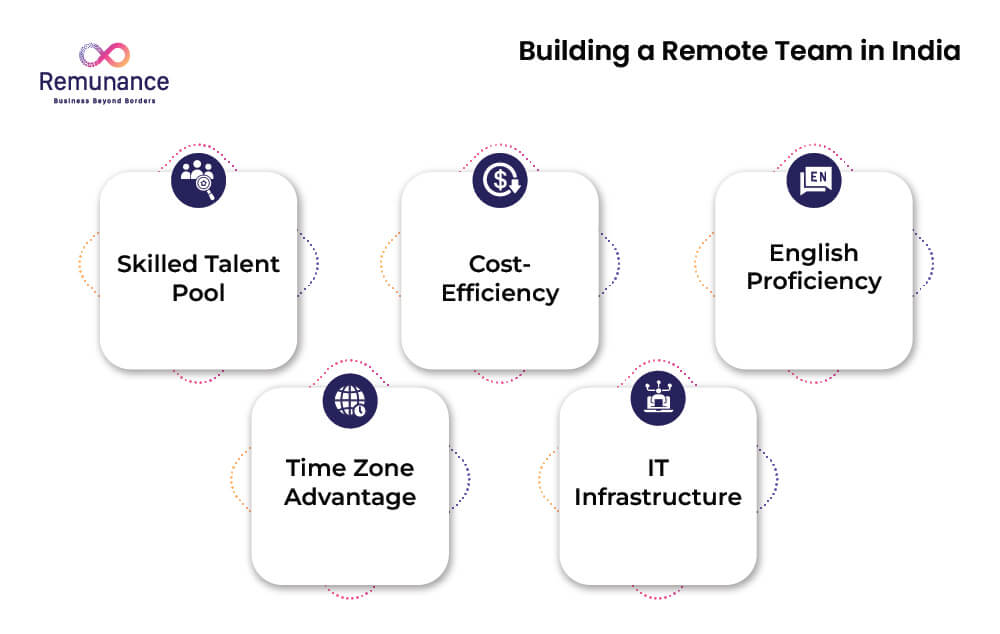
Now that we know India is a popular destination for businesses to establish a remote team.
Let’s explore the reasons:
Large Skilled Talent Pool
India is the biggest hub for IT professionals and engineers.
Moreover, India has successfully provided skilled professionals in various industries, including finance, marketing, design, and HR services.
If a country has this wide availability of professionals, it becomes easier for companies to find the right resource and build a remote team.
Cost-Efficiency
India is widely famous for its low cost of living. As a result, hiring employees becomes cost-effective compared to other countries.
India offers the best options to save costs, enabling businesses to build their remote team of skilled workers at a fraction of the cost.
English Proficiency
India is one of the largest English-speaking countries in the world.
Since communication is the most essential part of having a remote team, proficiency in English helps remove communication barriers. With this quality, Indians have been a priority for many businesses.
Time-zone Advantage
Indians are flexible with both the US and European working time zones. This flexibility helps keep operations and communication smooth with global teams.
Strong IT and Remote Infrastructure
India is well-equipped with high-speed internet, coworking spaces, and some of the world’s best IT service sectors.
India is an ideal country for building a remote team.
Ready to Build Your Remote Team in India?
Access India’s skilled talent without the complexity of setting up a local entity. Remunance helps you hire, onboard, manage payroll, and stay compliant.
Steps to build a remote team in India
Now that we have gone through the reasons, let’s understand the steps to build a remote team in India.
Step 1: Establish your purpose of forming a remote team
First, identify your specific needs for a remote team. List all your needs properly, such as if you’re looking for developers, marketing specialists, or customer support executives. Defining roles and responsibilities helps you find the right talent.
Step 2: Choose the right hiring model
There are several hiring models to choose from. Let’s explore them one by one.
-
- Direct hiring: This is the most expensive option. All you have to do is set up an entity in India and employ workers directly.
- Freelancers/Contractors: If you have a short-term project or need a project-based worker, this is the best option for you.
- Employer of Record: In this scenario, a local EOR partner assumes responsibility for hiring full-time employees without establishing a separate entity. EOR’s primary function is to help in compliance with labor laws and avoid penalties.
Among the options provided, an employer of record is the safest and most compliant option for building a remote team.
Step 3: Attract and hire skilled talent
India is popular for having a diverse and skilled workforce. Options such as job portals, recruitment agencies, or EOR partners are the most viable for recruiting suitable candidates.
To attract qualified candidates, emphasize flexibility in work arrangements and career growth opportunities.
Step 4: Put compliance and legal setup in place
Employers must comply with local labor laws and legal requirements when hiring employees in India.
Legal requirements such as
-
- Employment contracts
- Tax compliance
- Social security contributions
Step 5: Set up communication channels
Since it will be a remote team, the company needs to establish an effective communication channel.
Companies can consider tools like,
-
- Slack
- Microsoft Teams
- Zoom
These tools are most effective for daily interactions, updates, and work feedback.
Step 6: Offer, Onboarding, and Integration
After completing the onboarding paperwork, introduce your employees to the company culture, goals, and values. The ideal onboarding experience can lead to increased retention and long-term productivity.
These are the essential steps for establishing a remote team in India. Now, let’s understand the challenges.
Challenges of Building a Remote Team in India
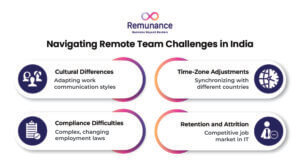
Following these steps presents some challenges; let’s examine them one by one.
Cultural Differences
As the country evolves, so do its culture and living conditions. Indian culture isn’t difficult to adapt to, but it may seem different in terms of work approaches and communication styles. Adapting to Indian culture will help you overcome the challenges.
Compliance Difficulties
In India, employment laws change by state. Managing contracts, benefits, or taxes can cause big trouble. Companies need to find a local expert to tackle this compliance challenge. Relying on EOR would be one of the best options to provide relief from extra headaches.
Time-Zone Adjustments
India has long been a preferred destination for hiring a remote team because it can work overlapping hours with major markets. But synchronizing across countries can still be challenging. To minimize delays in operations or communication, precise scheduling is necessary.
Retention and Attrition
India has a competitive job market, especially in the IT industry. Employers determine how they offer growth opportunities, benefits, and employee engagement. Offering appropriate advantages can help reduce attrition when building a remote team.
Remunance Employer of Record
Overcome the Challenges of Building a Remote Team in India
Build your India team with confidence. Remunance handles local compliance, payroll, HR, and employee management so you can focus on growing your business.
Build Your Team with Remunance
Best Practices to Build a Remote Team in India
Now that we understand the challenges, let’s look at the best practices to overcome them. Here are proven strategies for building the best remote team in India.
Partner with local experts:
Contact EOR services, HR outsourcing firms, or recruitment agencies that are well-versed in Indian labor laws. These local partners help reduce the risk of penalties and speed up hiring in India.
Focus on Cultural Alignment:
Ensure that your Indian employees and global teams receive proper cultural orientation. This will lead to fewer misunderstandings and promote collaboration.
Impose Agile Practices:
Project management tools like ClickUp, Trello, or Zoho are ideal for ensuring accountability, task visibility, and faster decision-making in remote teams.
Prioritize Employee Engagement:
Consider employee engagement for better productivity. Introducing virtual coffee breaks, online workshops, and recognition programs will encourage employees to work hard.
Offer Career Development:
Provide your employees with certifications, training, and mentorship programs to help them develop their skills. To enhance retention, offer valuable learning opportunities and career development.
How EOR Helps in Building a Remote Team in India
Employer of record services cover everything that a remote team needs.
EOR helps employers win half the battle by reducing overhead costs and offering a cost-effective service.
It enables faster market entry and helps you establish a remote team without needing an entity.
EOR in India addresses your biggest challenges, including compliance risk, payroll, and employment laws.
An employer of record in India provides additional benefits, including local benefits, health insurance, and timely salaries.
EOR in India is also one of the most popular options for foreign businesses.
Remunance Employer of Record
Build Your Remote Team in India Effortlessly
Let an Employer of Record handle compliance, payroll, and benefits while you build a skilled remote team quickly and cost-effectively.
Talk to Our HR Experts Today FAQs
What are statutory benefits in India?
Statutory benefits are the mandatory employee benefits in India which include retirement plans, health insurance, etc. These are mandated by the Indian government.
What are the main benefits of hiring remote employees from India?
Key advantages include:
-
- Strong English communication abilities
- A dependable IT infrastructure
- Time zone flexibility
- Access to a vast talent pool
- Lower labor costs
All of these elements work together to help international companies maximize operating costs while maintaining high production.
Is it necessary to set up a legal entity in India to hire remote workers?
In India, establishing a legal entity is not required. Employers of Record (EOR) partners enable businesses to hire workers in a compliant manner.
You can swiftly expand your remote workforce without creating an entity, as the EOR handles all local legalities, including payroll, employment contracts, tax compliance, and benefits.

Related Posts

Hire Employees in India: Complete Guide for Global Companies

Benefits of Hiring International Employees for Business Growth

Hiring Globally? Key Considerations For Choosing Where To Hire

Hiring Internally vs Externally: Pros and Cons

10 Steps for Hiring Your First Employee in India