Comprehensive Guide to Paternity Leave in India
This article talks about paternity leave in India, including the laws, what the government pays for, what private companies do, how to implement it in HR, and how helping fathers at work may help businesses. Great for businesses who want to make their hiring policies more inclusive.
📑 Table of Contents
Paternity leave in India is designed to align with workforce rules, company policies, and changing family roles.
The national framework for paternity leave in India is still quite in its nascent stage. However, conversations about fathers in early childcare have grown in many industries.
Paternity leave is now influencing hiring, retention, and company culture.
Businesses are focusing on offering inclusive and competitive employment benefits in India.
For employers, paternity leave is no longer a secondary benefit. It shows maturity in HR policy design. It impacts employer brand positioning and matches the move toward fair caregiving roles.
Organizations that include paternity leave in their people strategy gain long-term benefits. They attract skilled professionals and help maintain workforce stability.
Legal Framework Governing Paternity Leave in India
Who is Eligible for Paternity Leave in India?
India’s paternity leave rules are based on the Central Civil Services (Leave) Rule 551(A), enacted in 1972.
This rule only applies to male government workers. It sets a clear entitlement framework:
-
- 15 days of leave, usable within six months of childbirth or adoption.
- Mandatory service requirement of 80 days within the preceding 12 months.
- The adoption clause is applicable only when the adopted child is below one year.
The rule allows employees with tenure to access the benefit. This shows that paternity leave supports long-term employment relationships.
Compensation During Paternity Leave in India
Paternity leave under this rule is fully paid. Employees get their full pay while on leave. This helps ease money worries during early parenthood.
This is a direct derivative of maternity benefits in India to ensure consistency in law for all government employees.
Protected Leave Rights
Paternity leave is a standalone leave category with no overlap or deduction from earned leave.
It doesn’t use annual leave, can’t be withheld if eligible, and must be granted with a valid application.
This protection ensures guaranteed benefit, prevents discretionary denial, and safeguards employee rights.
Utilization Conditions and Limitations for Paternity Leave in India
The leave entitlement lapses if not used within the designated six-month window.
For adoptive fathers, this framework only applies if the adopted child is under one year old. It keeps the focus on early developmental caregiving.
Paternity Leave in India for Private Companies
Paternity leave in India is not legally mandated for private-sector employees.
This is different from maternity leave, which is governed by the Maternity Benefit Act.
A 2017 bill to create a uniform standard did not pass. As a result, the private sector must rely on voluntary adoption of policies.

Voluntary Adoption by Progressive Organizations
Many private companies now offer paternity leave as part of their HR strategy.
Some align their policies with the 15-day government benchmark. Some go further by including benefits in employee contracts and company policies.
This voluntary adoption meets the needs of the talent market and supports branding. It also aims to improve gender balance in caregiving roles.
Create a Family-Friendly Workplace with Better Paternity Leave Policies
Empower your workforce with supportive paternity leave benefits that boost retention, strengthen employer branding, and promote an inclusive culture. Give your employees the confidence to balance work and family with ease.
Strategic Implementation Framework
Policy Development and Documentation
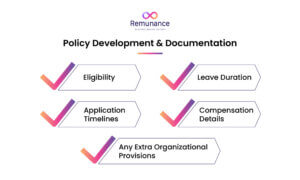
Written documentation clears up confusion. It helps teams apply rules consistently. Plus, it boosts legal protection in HR operations.
Employee Communication
Policies only achieve intended outcomes when communicated effectively. Organizations should teach employees about paternity leave during onboarding.
This can be done using handbooks, internal knowledge bases, and regular HR updates. Clear timelines and eligibility help employees plan better, especially during pregnancy or adoption.
Streamlined Applications and Approvals
Efficient administrative processes shape the employee experience. Digital submissions, predictable approval workflows, and minimal procedural friction demonstrate genuine organizational support.
Straightforward systems also help teams manage workload distribution in advance of leave periods.
Post-Leave Integration and Support
Modern organizations extend support beyond the leave period. Structured handovers, reintegration planning, and flexible re-entry options help returning fathers.
Access to employee assistance programs boosts work-life balance and helps keep performance on track.
Leading Paternity Leave Practices in India
Technology and New-Age Sectors Setting the Pace
Several Indian companies have established benchmark policies far ahead of statutory standards:
-
- A big food-delivery service provides 26 weeks of paternity leave. It also offers parental financial support, in line with today’s global standards for parental leave.
- A major IT services firm offers 8 weeks of fully paid leave. This includes coverage for adoptive parents and primary caregivers.
- A global consulting firm provides 15 days of paid leave (matching government standards).
- A big food-delivery service provides 26 weeks of paternity leave. It also offers parental financial support, in line with today’s global standards for parental leave.
These examples show that paternity leave matters. It helps keep talent and boosts employee satisfaction in skilled jobs.
International Comparative Perspective
Global standards exceed India’s provisions by a substantial margin.
The global average is about 18 weeks. Many countries create shared parental leave systems. These systems let parents divide leave flexibly.
Sweden’s 480-day parental leave model is one of the most comprehensive in the world. It focuses on child development and supports gender-neutral caregiving.
Additional International Supports
Countries support leave benefits through tax breaks, childcare subsidies, and flexible return-to-work plans.
They also offer gender-neutral parental leave options. These systems enable both parents to participate in long-term caregiving.
Impact on Multinational Employers
Companies employing distributed teams must balance variations in national regulations.
A trend toward consistent global parental leave policies helps treat everyone fairly. It also makes HR administration easier across different regions.
This shift mirrors broader movements toward unified compensation frameworks and skill-based remuneration.
Organizational Impact of Well-Designed Paternity Leave Policies in India
Improved Retention
Paternity leave directly reduces turnover risk. Employees who feel respected and supported during significant life events are more loyal.
They are also less likely to leave. Retention preserves institutional knowledge, stabilizes team dynamics, and reduces rehiring costs.
Higher Satisfaction and Commitment
Employees build stronger emotional connections with organizations that recognize family responsibilities.
Positive experiences during paternity leave lead to long-term engagement. This shows that the organization values overall well-being.
Productivity Gains
Returning employees often show improved focus and reduced stress. When caregiving is supported, employees stay more engaged and produce better work.
Better Work-Life Integration
Being active in early parenthood boosts mental health. It cuts down burnout and helps maintain balance over time. This stability benefits both the employee and the organization by improving performance consistency.
Cultural and Brand Advantages
Paternity leave reflects a progressive, inclusive culture. It boosts employer branding, draws in modern talent, and shows that parenting roles are shared, not limited by gender.
This shift enhances outcomes in diversity, equity, and inclusion.
Proactive Compliance Advantage
As global rules around parental leave grow, companies that adopt progressive policies early stay ahead.
This helps them avoid last-minute changes and ensures smooth compliance.
Remunance Employer of Record
Transform Your Workplace with Strong Paternity Leave Policies
Adopt modern paternity leave benefits to boost retention, strengthen your culture, and enhance your employer brand. Start building a more supportive and future-ready workplace.
Talk to our Expert
What are the challenges of paternity leave for employers and employees in India?
In India, there’s no single law for paternity leave in the private sector. This makes it challenging for both employers and employees.
Without a clear structure, organizations create their own standards. This causes inconsistent policies and uneven benefits. It strains operations. Teams must balance employee needs with their own leave requirements.
The problems for workers extend beyond just policy gaps. Many new dads hesitate to take leave. Many feel social pressure. Most private companies don’t provide paid paternity leave.
This makes things more challenging financially. Many people are unaware of their rights. They worry that taking time off might hurt their careers or make them seem less dedicated.
Putting all these factors together creates a broken system. Neither side has clear safeguards or expectations in place. This makes paternity leave hard to understand in most Indian organizations.
Paternity Leave Through Employer of Record (EOR) Solutions
Compliance Complexity in Multi-Country Teams
Managing parental leave in different areas needs a clear understanding of:
-
- Local regulations
- Payroll integration
- Tax treatment
- Documentation
- Termination protection
Without a specialized compliance framework, organizations risk administrative errors and regulatory penalties.
Role of Employer of Record Services
EOR providers ensure compliance with local labor laws, including parental leave rights.
They handle employment contracts, payroll, and benefits. They also manage HR duties for companies hiring internationally.
Strategic Advantages
Using an EOR allows companies to:
-
- Enter new markets without establishing legal entities
- Scale hiring quickly
- Reduce compliance risk
- Access global talent pools
- Maintain uniform internal standards across locations
This setup lets organizations focus on growth. It also makes sure that parental leave and all required benefits are adequately managed at the local level
How can Remunance help you with paternity leave in India?
Remunance is the best employer of record in India and is highly regarded among global businesses seeking employee benefits assistance in India.
Through its vast network of local experts across various states, Remunance can assure you of the best policies that give you an employment edge.
Remunance can help you design a competitive paternity leave package to hire, recruit, and retain the best talent in the Indian market.
Through Remunance EOR, businesses can match the paternity benefits they offer in their parent organization, and it is also widely appreciated for its payroll integration, tax treatment, documentation, and termination protection.
Conclusion
Paternity leave in India is changing. Right now, laws mainly apply to the public sector.
In the private sector, companies choose whether to offer it. Its importance keeps growing. Organizations see the long-term benefits of supporting fathers in early parenthood.
Companies in India or those hiring Indian professionals worldwide need to grasp the current rules.
They should also be aware of new market trends, global standards, and compliance issues. Good paternity leave policies are important.
They can deliver clear benefits, such as lower turnover, greater employee engagement, stronger employer branding, and a more inclusive workplace.
Paternity leave is key as workforce expectations shift. People want more flexibility, fairness, and shared caregiving. Companies that offer this will stay competitive and ready for the future.
Stay Ahead with Modern Paternity Leave Policies
Build a competitive, future-ready workplace by aligning your policies with evolving expectations. Support your workforce, strengthen your brand, and ensure compliance—all with the right guidance

FAQS
Is paternity leave mandatory in India?
Paternity leave is mandatory for the central government employees and for the private sector, the businesses are free to draft their policies.
How long do government workers get off for paternity leave?
Government employees get 15 days of fully paid leave that can be taken within six months of giving birth or adopting a kid.
Do private businesses give paternity leave?
A lot of private companies do give paternity leave but there are no government guidelines mandating it.
Do you get compensated for paternity leave in India?
Yes, for people who work for the government. In the private sector, how much you get paid relies on the company’s own rules.
Do adoptive fathers get paternity leave?
Yes, if the adopted individual is less than a year old.
Is paternity leave part of annual leave package?
No. It is a different kind of leave designed to make sure it is not withheld or denied.
Can an employer say no to paternity leave?
If you meet the requirements, government employers can’t say no. Official corporate policy decides whether or not the private sector can approve.
Is there a minimal service level?
Yes. Before having a baby or adopting, government employees must work for more than 80 days.
Does taking paternity leave effect getting a promotion or doing a good job?
It shouldn’t be a problem if the policies are carefully thought out. Most forward-thinking businesses see it as a natural part of life.
Do EOR providers make sure that paternity leave is followed?
Yes. EOR partners take care of all legal leave duties dependent on where the employee is.

Related Posts

Maternity Leave in India – Understanding the Maternity Benefit Act

A Guide to Statutory and Supplemental Employee Benefits in India