Summary:
In this comparison of PEO vs. ASO vs. HRO, it’s found that while the models may sound similar, they differ in key ways. Varied business needs may require different types of models, and understanding each model well helps you choose the right one.
Have you been confused about the best hiring solution when comparing PEO vs. ASO vs. HRO?
Each model seems similar, and you don’t know which is right for your business.
Well, you’re in the right place if you want a clarified understanding. Hiring solutions such as Professional Employer Organisation (PEO), Administrative Services Organisation (ASO), Human Resource Outsourcing (HRO), etc., are a great way to expand your business. And expand while offloading the HR and administrative work.
It’s a smart way to do business; many big or small companies don’t hesitate to outsource these functions using one of these models.
That being said, today in this blog, we dissect the topic of PEO vs. ASO vs. HRO.
By the end of this blog, I hope you have your answers and that you have found the hiring model that is best suited for your company.
Understanding the Basics: PEO vs ASO vs HRO
Before we get into the nitty-gritty, let’s understand the meaning and a fundamental distinction between each hiring model.
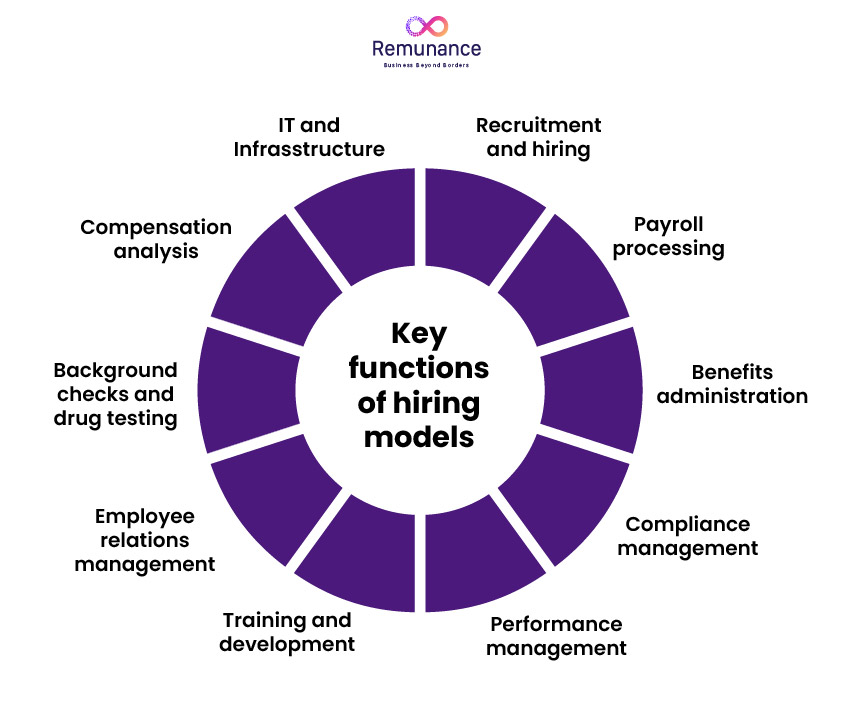
What Do These Hiring Models Do?
A common denominator in PEO vs. ASO vs. HRO is that they all help you manage the burden of your HR and administrative tasks.
The ideal model differs based on various factors. For example, hiring employees in a different state but in the same country, and a local PEO is your choice.
But you don’t want to enter into co-employment and ASO is your choice.
That is one of the main factors when comparing the difference between PEO and ASO. We’ll be understanding more of that as we go ahead.
What is a Professional Employer Organisation (PEO)?
A professional employer organization is a company that assumes responsibility for your HR administration.
The key feature of a PEO is that it manages your HR functions by becoming your co-employer.
The administrative and legal responsibilities are shared with your PEO partner, which manages employee-related compliance.
However, you retain complete control over your employees’ day-to-day operations.
What is the Administrative Services Organization (ASO)?
An administrative services organization is a company that solely manages your HR administrative tasks.
A key difference between PEO vs. ASO is that an ASO has no co-employment or shared legal responsibilities.
In fact, the term ASO was coined by the PEO industry in the late 1990s. The purpose was to separate the two and highlight the difference between ASO, which offered selective services, and PEO, which offered a more comprehensive suite.
What is Human Resources Outsourcing (HRO)?
A human resources outsourcing company helps you outsource some or all of your HR functions. Unlike an ASO which stays limited to a local market, an HRO can stretch its scope internationally.
Comparing PEO vs. HRO, with an HRO you retain ownership of your legal responsibilities and control over your employee operations.
One significant difference between ASO & PEO vs HRO is that an HRO helps you hire internationally.

In breaking down PEO vs. ASO vs. HRO, we now come to the pros and cons of each model.
We also get the answer to an essential question as a business: when can you use it? This should help you get a clear idea of which model may suit you best.
How Does a Professional Employer Organization (PEO) work?
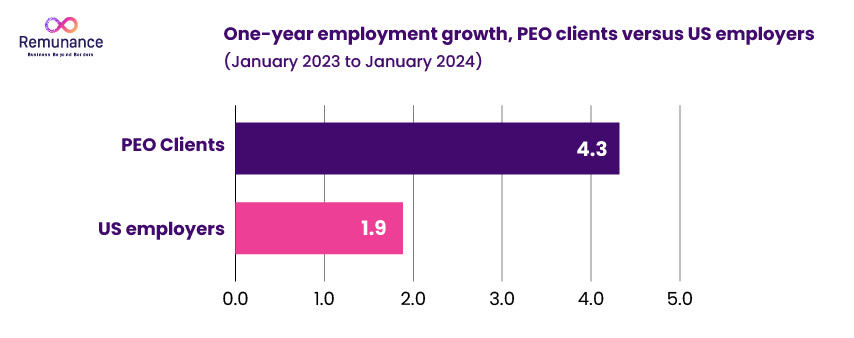
A whitepaper published by NAPEO states that companies that choose PEO services grow more than twice as fast as other companies. Let’s understand why.
Advantages
-
- With a PEO, you can establish a strong local presence nationwide. It helps you hire top talent, optimize your local workflow, and keep you at the top of your game.
- Your local PEO partner can help you better navigate the cultural sensitivities of different locations. It enables you to maintain a healthy work environment.
- As a PEO shares co-employment with you, they are responsible for local compliance related to your employees, their benefits, and assistance with tax administration.
- The NAPEO white paper states that employee turnover for PEO clients is 12% lower than for other companies. This is because the PEO shares in and takes responsibility for your employees’ engagement, retention, and motivation.
Disadvantages
-
- A PEO often offers services packaged together. This reduces service customization, requiring you to choose from predetermined service packages. For instance, payroll and benefits administration are included in all PEO packages.
- Since a PEO is your co-employer, it assumes control over specific internal HR processes and policies. This requires you to operate those said functions according to their standards.
When to use PEO?
-
- A PEO is an excellent option for an SME with limited internal HR expertise and resources. It is like an HR department in a box you don’t have to build or pay for yourself.
- This model works best if you have specific local market needs. It can help you hire anyone from construction workers to people in legal or manufacturing industries.
- Since a PEO is a co-employer with you, it is one of the best models if you want to share/reduce your compliance risks. You can easily leave all employee compliance to your PEO partner. Meanwhile you take care of other compliance related to your business or your local entity.
- If you want to expand into different states within the same country without setting up offices in those states, this model is your answer. It offers that added support, which reduces the burden on your internal HR team.
How Does Administrative Services Organization (ASO) Work?
Advantages
-
- One major point in PEO vs ASO is that you don’t enter co-employment with an ASO. And hence, you don’t lose any control over your employees or HR administration, as you set your own policies and handle your own compliance.
- Comparing PEO vs ASO, an ASO model offers a much more selective range of services. You can customize the scope of services you require and create the package that suits you best.
- Unlike a PEO, you can hire a whole internal HR team here, saving you the cost of hiring HR personnel in-house.
- An ASO can help you hire freelancers and independent contractors by managing their administration and payments, which can be a challenge with some PEOs.
Disadvantages
-
- ASOs often charge a flat fee per employee, which can get expensive if not managed properly.
- While you can outsource all HR functions to an ASO, it may also cause reduced employee engagement and increased turnover. Impersonal communication can make employees feel undervalued, as there would be no direct relationships.
When to use ASO?
-
- An ASO model is the best option if you’re looking to expand your operations but aren’t hiring at scale.
- You can choose ASO if you need a cost-effective alternative to a full-service PEO.
How Does Human Resources Outsourcing (HRO) Work?
Advantages
-
- High savings on costs, as you may not need an in-house HR team at all. You’ll still need a legal team to oversee your legal administration. However, the total costs will still be less.
- An HRO model can provide compliance for both your onshore and offshore teams. They are experts in international law and also understand the depths of local law.
- In PEO vs. ASO vs. HRO, HRO is the strongest option if you want access to talent acquisition. Human resources outsourcing not only helps you hire local talent but also allows global expansion. Meaning, with an HRO, you can hire globally.
Disadvantages
-
- With an HRO, you may face hidden charges if you’re not upfront about transparent pricing.
- Since the company shares sensitive employee and company data with the HRO partner, there can be a risk of data breaches if strong cybersecurity measures are not in place.
- One similarity between PEO and HRO is that both models offer less control over the HR operations you outsource.
When to use HRO?
-
- You can choose HRO if you want to outsource specific tasks and not the entire HR function.
- HRO is a great option if you need enterprise-level HR support.
- Since HRO companies operate globally, they have the most advanced technology solutions. This is an excellent choice if you want high-end tech support without any investment.
- Between PEO, ASO, and HRO, an HRO model is the one that offers multi-country support. You can hire in any country you wish to expand to.
I want to bring to your attention another model that offers multi-country support: international PEO. With an HRO, you still bear most of the legal and compliance burden, as you are the legal employer.
An international PEO is a more global version of PEO.
Here, your global PEO partner assumes complete legal responsibility and becomes an employer of record for all your employees.
For example, you wish to hire employees in India.
To successfully hire in India, one crucial step is to ensure you choose the best employer of record. Your international PEO partner will handle all compliance requirements for your employees in this country.
What is the Difference Between PEO vs ASO vs HRO?
After understanding the scope of each HR model, let’s jump to the differences between PEO vs ASO vs HRO.
| Services | PEO | ASO | HRO |
| Co-employment | Yes | No | No |
| Legal liability | Shared liability | No | No |
| Risk management | Yes | No | Yes |
| Payroll processing & tax filing | Yes | Yes | Yes |
| HR compliance & employment law support | Yes | Yes | Yes |
| Benefits administration & insurance | Yes | Yes | Yes |
| Recruiting and talent acquisition | Yes | No | Yes |
| Employee onboarding and training | Yes | Yes | Yes |
| HR services customization | Yes | No | Yes |
| International hiring & HR support | No | No | Yes |
| Background checks & testing | Yes | Yes | Yes |
| Full outsourcing of HR functions | No | Yes | Yes |
| Employment contracts | Yes | No | No |
Conclusion
And with that, we reach the end of the blog. We’ve seen the striking differences between PEO vs ASO vs HRO.
And by now, I hope I have answered the question of which model suits your needs the best.
-
- Local PEO for services in the local market with co-employment
- ASO for services in the local market without co-employment, and
- HRO for international markets without co-employment.
- We also discussed international PEO, which is for international hiring and with co-employment.
But if I were to leave you with an opinion of mine, someone who’s analyzed the topics to the grain, this is what I would suggest –
-
- If you’re a startup, PEO would be a great choice. You share responsibility and receive expert guidance.
- If you’re a small or mid-sized company, PEO vs. ASO will work just fine.
- If you’re a business of any size looking to expand internationally, an international PEO would be a better bet than an HRO.
And voila! Happy hiring!
About Remunance
Remunance is an Employer of Record (EOR) services provider in India, helping global companies hire, manage, and support full-time employees without setting up a local entity. We take care of HR, payroll, compliance, and benefits so businesses can focus on growth while building their teams in India with confidence.
Remunance enables businesses from UK, Australia, Canada, France, US, and the Middle East to recruit, hire, and manage workforce and benefits in India.



FAQs
What is the difference between ASO and PEO?
A PEO (Professional Employer Organization) acts as your partner in a “co-employment” role. They become the employer of record for taxes and benefits. This means you share the legal risk. An ASO (Administrative Services Organization) is just a service provider. They manage payroll and HR tasks, but you remain the sole boss on paper. This means you keep all the control and the liability.
What is the difference between HRO and PEO?
The big divider here is the “employer of record” status. A PEO steps into the foxhole with you. They handle your HR risks and compliance issues through co-employment. An HRO (Human Resources Outsourcing) is more like a menu of services. You can pick and choose which tasks to offload, but the legal buck still stops with you. HROs offer a lot more flexibility if you aren’t ready to hand over the keys to your HR department.
What does ASO stand for in insurance?
In the insurance world, ASO stands for Administrative Services Only. A company can decide to pay for its health benefits directly. This means they skip buying a traditional plan. You pay the claims yourself, but you hire an ASO provider to handle the tough parts. They process the claims, manage the billing, and ensure everything follows the law.
Who are ASOs best for?
An ASO is a smart option for businesses. It helps them control company culture and workforce choices. It’s great if you have a small HR team, but if they’re swamped with admin tasks, it’s time to get help. It’s a good “middle ground” for companies needing payroll or benefits help. They don’t want a third party to share legal ownership of their employees.
Who are PEOs best for?
PEOs help small to mid-sized firms that lack time or staff for managing their workforce. A PEO helps you provide top benefits like big companies do. It allows you to reach a larger pool of resources for your team. They’re perfect for owners who want to skip the hassle of compliance and payroll. This way, they can focus completely on growing their business.